Garage Tool Organization Ideas: 10 Ways to Store Tools and Reclaim Your Space
As an Amazon Associate we earn from qualifying purchases. Disclosure
1. Wall-Mounted Rail Systems for Everyday Tools
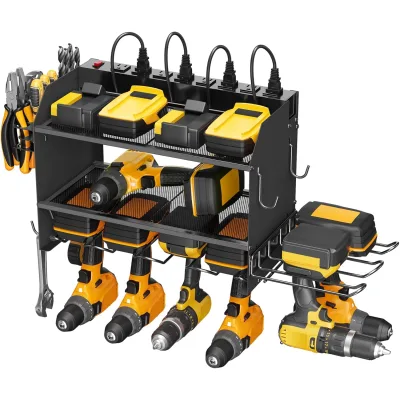
Wall-mounted rail systems are one of the easiest ways to organize frequently used tools while keeping work surfaces clear. The rails mount directly to wall studs and accept a variety of hooks, baskets, and holders that can be rearranged as your tool collection changes. Position the rails above a workbench or along the wall where you normally complete projects so tools stay within easy reach.
Arrange tools by size and frequency of use instead of placing them randomly. Keep drills, hammers, levels, tape measures, and extension cords closest to your primary work area, while larger items can occupy the ends of the rail. Leave enough space between hanging tools so you can remove one without knocking others off the hooks. Avoid mounting rails on drywall alone without proper support, especially if they will hold heavier equipment.
Install a rail directly above your workbench with separate hooks for your drill, hammer, level, and extension cord. Every tool has a visible home, making cleanup much faster after each project.
Pro tip: Leave one or two empty hooks when installing a new rail so your storage system can grow without needing another installation.
Works well for: Power drills, hammers, levels, extension cords.
2. Pegboard Panels for Hand Tools
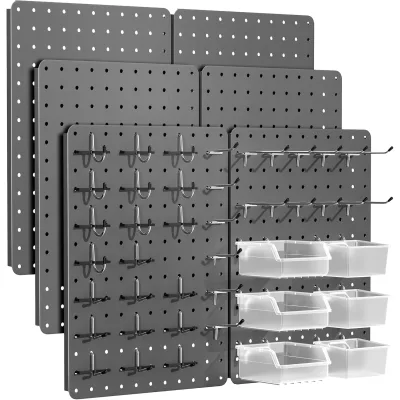
Pegboard remains one of the most flexible garage tool storage ideas because the layout can change whenever your collection changes. Mount the panel behind a workbench and install a variety of hooks sized for different hand tools. Keeping tools visible eliminates time spent opening multiple drawers to find the right item.
Organize the board by category instead of alphabetically. Place screwdrivers together, group pliers in one section, and dedicate another area to measuring tools. Tracing tool outlines or using labels helps everyone return tools to the correct location. Avoid overcrowding the board because densely packed tools become difficult to remove.
A simple setup might include measuring tools across the top row, screwdrivers in the center, and pliers along one side. Frequently used tools should always occupy the easiest-to-reach positions.
Pro tip: Leave a few inches of open space between tool categories so future additions fit naturally without reorganizing the entire board.
Works well for: Screwdrivers, pliers, adjustable wrenches, measuring tapes.
3. Overhead Storage for Bulky Equipment
Ceiling-mounted storage racks free valuable floor space by moving large, lightweight items overhead. They work especially well in garages where wall space is already occupied by cabinets or workbenches. Install racks above garage doors or over parked vehicles where the space would otherwise go unused.
Reserve overhead storage for equipment you only access a few times each year. Seasonal decorations, folding ladders, camping equipment, spare lumber, and empty storage bins are good candidates. Avoid placing frequently used tools overhead because retrieving them repeatedly becomes inconvenient. Always follow the rated weight capacity and distribute loads evenly across the rack.
Store holiday decorations and camping gear in labeled storage bins on an overhead rack while keeping everyday tools closer to your workbench.
Pro tip: Label every storage bin on two sides so you can identify contents without climbing a ladder.
Works well for: Folding ladders, camping gear, seasonal equipment, empty storage totes.
4. Tool Cabinets and Rolling Carts
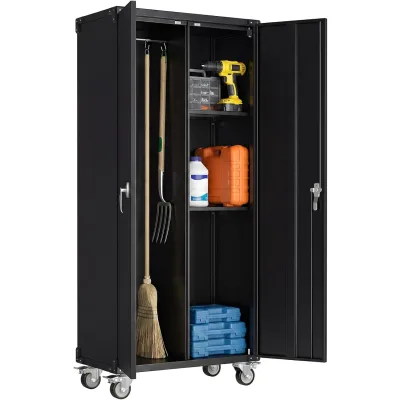
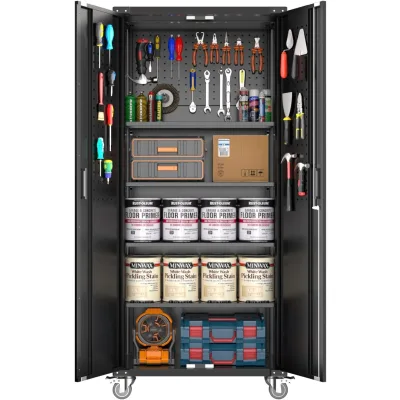
Tool cabinets create organized, enclosed storage that protects equipment from dust while giving every tool a dedicated drawer. Rolling carts provide the added benefit of bringing tools directly to your work area instead of making repeated trips across the garage.
Assign each drawer to a specific category such as sockets, screwdrivers, measuring tools, electrical supplies, or power tool accessories. Avoid filling drawers randomly because that defeats the purpose of organized storage. Heavy tools belong in lower drawers to improve stability and reduce tipping.
Dedicate the top drawer to measuring tools, the second to screwdrivers and pliers, and lower drawers to heavier socket sets and specialty equipment.
Pro tip: Add drawer liners to keep tools from sliding and to reduce wear on drawer surfaces.
Works well for: Socket sets, ratchets, precision tools, cordless tool accessories.
5. Magnetic Tool Strips
Magnetic strips provide instant access to frequently used metal tools while freeing drawer space for bulkier equipment. Install them above a workbench or beside your primary project area where you naturally reach during repairs.
Limit magnetic strips to lighter hand tools rather than heavy equipment. Group similar tools together and keep sharp edges pointed downward or away from normal hand movement. Leaving some open space between tools makes each one easier to remove.
A common arrangement places screwdrivers together, followed by pliers, hex keys, scissors, and small pry bars. The result is a clean workspace where commonly used tools remain visible throughout a project.
Pro tip: Mount the strip slightly below eye level so tools remain visible without creating a hazard.
Works well for: Screwdrivers, pliers, hex keys, metal rulers.
6. Vertical Storage for Long-Handled Tools
Long-handled tools often create clutter when leaned against walls. Dedicated vertical holders keep every handle separated while preventing tools from falling over each time one is removed.
Install holders near the garage entrance, lawn equipment, or gardening supplies to keep outdoor tools grouped together. Space each holder wide enough that neighboring tools don't interfere when removed. Avoid placing them behind vehicles where access becomes difficult.
Dedicate one section to landscaping equipment with rakes, shovels, brooms, and snow tools stored side by side in an organized vertical row.
Pro tip: Arrange tools from shortest to tallest to improve visibility and make every handle easier to grab.
Works well for: Shovels, rakes, brooms, hedge trimmers.
7. Slatwall Panels for Flexible Storage
Slatwall panels allow storage accessories to move as your needs change. Hooks, baskets, shelves, and specialty holders can all be repositioned without drilling additional holes, making this one of the most adaptable garage tool organization ideas for spaces that evolve over time.
Divide the wall into zones based on project type. One section might hold woodworking tools, another electrical supplies, while another stores painting equipment. Avoid scattering categories across multiple wall sections because that makes cleanup more difficult.
Dedicate one entire slatwall panel to woodworking tools while placing finishing supplies in baskets below for a clean, logical layout.
Pro tip: Install the bottom row high enough to leave room underneath for larger floor-standing equipment.
Works well for: Safety gear, extension cords, battery chargers, woodworking hand tools.
8. Small Space Solutions for Tight Garages
Small garage tool organization ideas focus on making every square foot work harder. Even narrow wall sections, cabinet doors, and shelf undersides provide valuable storage when equipped with the right organizers.
Door-mounted racks keep sprays, lubricants, tape, and gloves off shelves. Hooks beneath cabinets hold safety glasses, hearing protection, and frequently used accessories. Narrow baskets fit between shelving uprights for small supplies that would otherwise disappear into larger storage bins.
Mount organizers inside cabinet doors while reserving shelves for heavier equipment and larger power tools to maximize every usable surface.
Pro tip: Measure every unused wall section before shopping because narrow organizers often fit places standard shelving cannot.
Works well for: Spray bottles, work gloves, safety glasses, tape rolls.
9. Stackable Bins and Drawer Organizers for Small Parts
Loose hardware quickly becomes frustrating when every screw, anchor, and connector shares one container. Stackable bins and drawer organizers separate small parts into clearly labeled categories while making inventory easier.
Store hardware by size rather than mixing different fasteners together. Label every compartment with both the hardware type and size. Transparent containers make it easy to spot low inventory before beginning a project. Avoid overfilling bins because digging through crowded compartments wastes time.
A practical setup includes separate containers for wood screws, machine screws, drywall anchors, washers, nuts, and electrical connectors — each clearly labeled and easy to access.
Pro tip: Reserve one empty compartment for leftover hardware from future projects instead of mixing it into existing bins immediately.
Works well for: Screws, nails, anchors, electrical connectors.
10. Create Dedicated Tool Zones
The most effective long-term organization strategy is assigning every tool category its own location. Instead of storing items wherever space is available, create dedicated zones for automotive work, woodworking, gardening, painting, electrical projects, and general repairs.
Keep each zone close to where those projects usually happen. Automotive tools belong near vehicle parking, woodworking tools near the workbench, and lawn equipment near the garage entrance. Review your layout every few months and move categories if your workflow changes. The goal is reducing unnecessary walking while making cleanup almost automatic.
Place a cabinet for automotive tools beside vehicle parking while storing woodworking equipment directly next to your primary workbench for a logical, efficient layout.
Pro tip: Create simple labels for each storage zone so every household member knows where tools belong.
Works well for: Automotive tools, woodworking tools, gardening equipment, painting supplies.
Once you've decided which organization ideas fit your garage, choosing the right storage products becomes much easier. Compare rail systems, cabinets, slatwall panels, storage bins, and organizers based on weight capacity, available wall space, installation requirements, and expansion options. Building your storage system around the types of tools you own today also leaves room for future additions without starting over.
Recommended Products
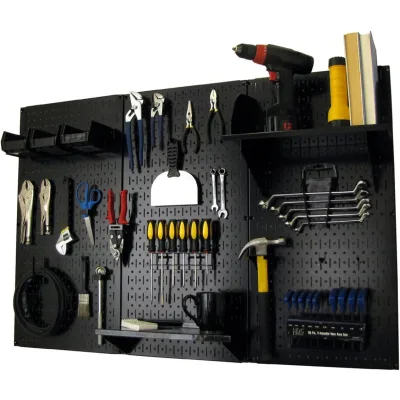
Wall Control Pegboard Plastic Tool Rack
Wall Control
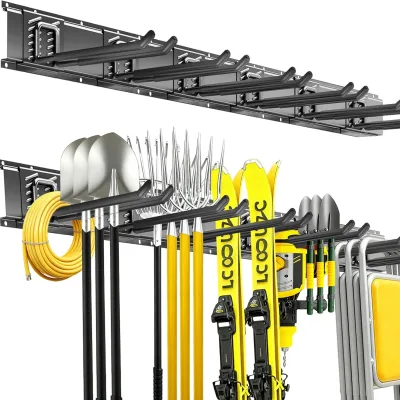
CRXCRC Wall Mount Steel Tool Organizer
CRXCRC
Prices last updated: June 24, 2026. Always verify on Amazon before purchasing.
Want to compare more options?
See all Garage Storage products →