How to Organize Kitchen Drawers: A Step-by-Step Guide
As an Amazon Associate we earn from qualifying purchases. Disclosure
How to Decide What Goes in Each Kitchen Drawer
The most effective kitchen drawer organization follows a simple principle: store tools where you actually use them. This is called point-of-use storage, and it is the reason some kitchens feel effortless to cook in while others require constant back-and-forth across the room.
Cooking zone drawer — the drawer closest to your stove should hold the tools you reach for during active cooking: spatulas, tongs, wooden spoons, ladles, whisks, and heat-resistant utensils. Everything you grab while something is on the stove belongs here.
Prep zone drawer — position a drawer near your primary cutting board that holds prep tools: peelers, zesters, measuring spoons, can openers, kitchen shears, and small gadgets used during food preparation. Keeping prep tools separate from cooking tools eliminates the need to search across multiple drawers during meal preparation.
Serving zone drawer — the drawer nearest your dining area or dishwasher should hold flatware, serving utensils, and anything used at the table. Placing silverware close to the dishwasher makes unloading faster and more consistent.
Lower drawers work well for heavier items, pot lids, and tools used less frequently. Upper drawers at easy reach height are best reserved for daily-use items. Applying this zone logic consistently means every tool is exactly where you need it when you need it.
Kitchen Drawer Organization Ideas for Every Drawer Type
Different drawers have different storage challenges. Here are specific organization approaches for each type.
Utensil drawer — use an expandable organizer with long compartments for spatulas and tongs and shorter sections for smaller tools. The organizer should span the full drawer width to prevent shifting. Bamboo and plastic expandable trays both work well — choose based on your kitchen aesthetic and cleaning preference.
Knife drawer — use a dedicated knife block insert with individual slots sized for different blade lengths. This protects blade edges and prevents the safety hazard of loose knives in an unorganized drawer. A deep-compartment insert with a non-slip base keeps knives from sliding.
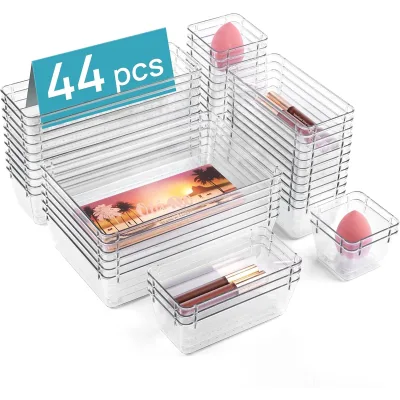
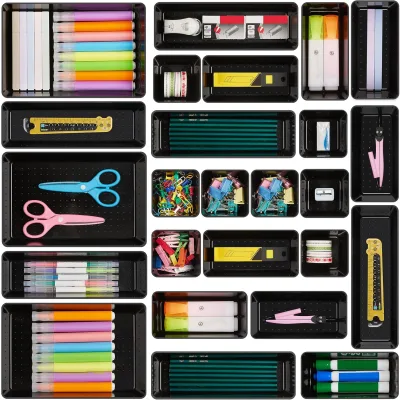
Junk drawer — use a modular tray system with a mix of small compartments for batteries, pens, tape, rubber bands, and miscellaneous items. Assign each compartment a specific category even in a junk drawer — this makes items findable in under 10 seconds instead of requiring a full excavation.
Spice drawer — a horizontal spice drawer insert holds jars flat with labels facing upward, making every spice visible the moment the drawer opens. This works particularly well if you want to keep spices off the counter entirely.
Small tools drawer — use dividers that create separate sections for measuring cups, measuring spoons, garlic presses, and other small gadgets. Group by function rather than size.
Deep drawers — require a different approach than standard drawers. See the section below for deep drawer specific strategies.
How to Organize Deep Kitchen Drawers
Deep kitchen drawers create a unique organization challenge: items placed in a single layer leave significant unused vertical space, while stacking items without a system means removing everything to reach what is at the bottom.
Use drawer dividers that span the full depth. Standard organizers designed for shallow drawers leave the back half of a deep drawer empty. Look for organizers specifically designed for deep drawers, or use tall adjustable dividers that create vertical sections from front to back.
Stack with intention. Deep drawers are ideal for nesting pots and pans with lids organized vertically using a lid rack or vertical divider insert. Standing lids upright in a dedicated section of a deep drawer eliminates the lid avalanche problem that occurs when lids are stacked flat.
Use the vertical space for tall items. Deep drawers can store items that do not fit in standard-depth drawers — tall water bottles, wine glasses laid on their sides, cutting boards stored flat, or folded dish towels in a dedicated section.
Add a second layer for small items. Stackable organizer trays create a removable upper layer over a lower storage area in deep drawers, effectively creating two storage levels in one drawer. Small items live on the upper tray while larger flat items live beneath it.
Once your drawer zones are established and you know which organizer type each drawer needs, comparing specific products by dimensions, material, expandability, and compartment layout makes the selection process straightforward. The right drawer organizer fits the drawer precisely, holds your specific tools without wasted space, and stays in position during daily use without sliding or shifting.
Recommended Products
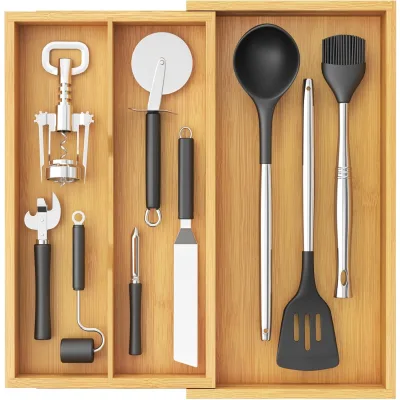
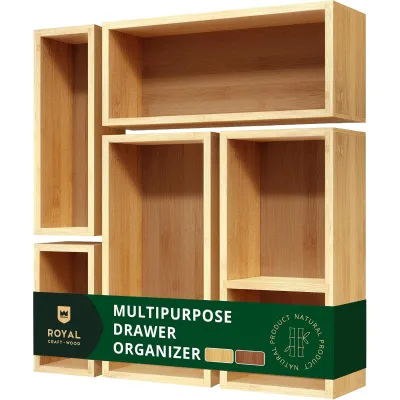
ROYAL CRAFT WOOD Bamboo Drawer Organizer
ROYAL CRAFT WOOD
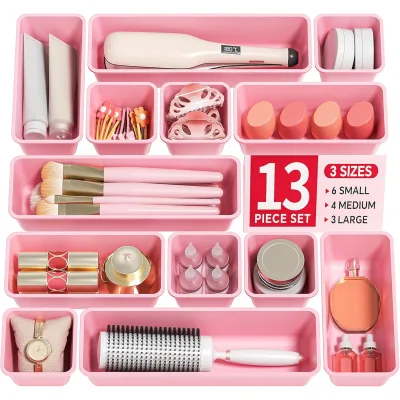
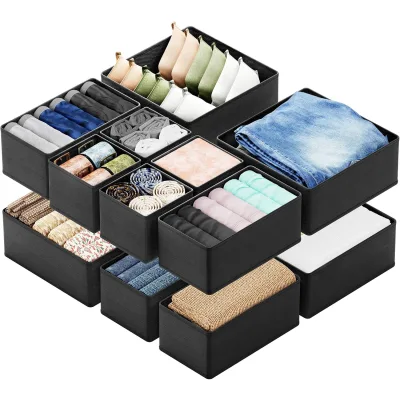
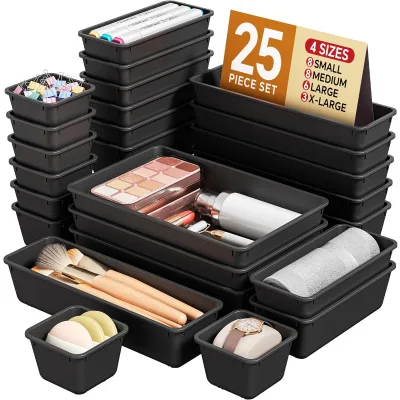
Prices last updated: July 9, 2026. Always verify on Amazon before purchasing.
Want to compare more options?
See all Drawer Organizers products →