How to Organize Kitchen Cabinets: A Step-by-Step Guide
As an Amazon Associate we earn from qualifying purchases. Disclosure
How to Decide Where to Put Things in Kitchen Cabinets
A zone-based layout is one of the simplest ways to organize kitchen cabinets because it stores items where they are used most often.
Create a prep zone near your primary counter with mixing bowls, measuring cups, knives, cutting boards, and food preparation tools. Place a cooking zone beside the stove with pots, pans, lids, cooking utensils, oils, and spices. A serving zone should hold dinnerware, glasses, serving bowls, and flatware near the dishwasher or dining area to simplify unloading and setting the table. Reserve a storage zone for food containers, small appliances, and pantry overflow.
Within each zone, store items based on how often they are used. Everyday dishes and cookware belong at eye level where they are easiest to reach. Heavy appliances, stock pots, and large mixing bowls should stay in lower cabinets to reduce lifting overhead. Upper cabinets work well for seasonal dishes, specialty bakeware, or entertaining supplies that are only needed occasionally.
Following these placement rules makes kitchen cabinet organization more efficient and reduces time spent searching for everyday items.
Essential Cabinet Organizers That Maximize Space
Cabinet organizers make better use of existing storage space without requiring new cabinets.
Lazy susans help corner cabinets become accessible by rotating spices, oils, condiments, or canned goods into view. They reduce wasted space that often develops in deep corners.
Shelf risers create an additional storage level for plates, mugs, canned goods, or bowls. Instead of stacking everything vertically, they make more items visible at a glance.
Pull-out drawer organizers bring items from the back of deep cabinets to the front, making cookware, cleaning supplies, and pantry goods easier to reach.
Vertical dividers keep baking sheets, cutting boards, trays, cooling racks, and serving platters standing upright instead of stacked. This makes individual pieces much easier to remove.
Door-mounted racks create storage for wraps, spices, cleaning products, or small kitchen tools by using the inside of cabinet doors.
Stackable bins group similar items together while making it easy to remove an entire category from a cabinet. Once you know which organizers fit your cabinets, comparing different sizes, materials, and capacities becomes much simpler.
How to Organize Kitchen Cabinets in a Small Kitchen
Small kitchens require every cabinet to work harder.
Start by decluttering. Removing anything you rarely use creates more usable storage than adding organizers alone. If you buy a new kitchen item, consider removing an older one to follow a simple one-in-one-out rule that prevents cabinets from becoming overcrowded.
Focus on vertical storage. Shelf risers, stackable bins, and vertical dividers create additional storage without increasing cabinet size. Store baking sheets and cutting boards upright instead of stacking them flat.
Use cabinet doors. Adding organizers for wraps, measuring spoons, cleaning supplies, or spices to the inside of cabinet doors often frees an entire shelf for larger items.
Organize drawers too. Dividers keep utensils, gadgets, and cooking tools separated so drawers remain organized instead of becoming catch-all storage. Keeping only frequently used items inside the kitchen and relocating specialty appliances to another storage area can also create valuable cabinet space.
Once your kitchen cabinets are organized into functional zones, the right cabinet organizers help keep everything in place. Comparing organizers by cabinet size, adjustability, storage capacity, installation method, and material makes it much easier to choose solutions that fit your kitchen and continue working long after the initial organization project.
Recommended Products
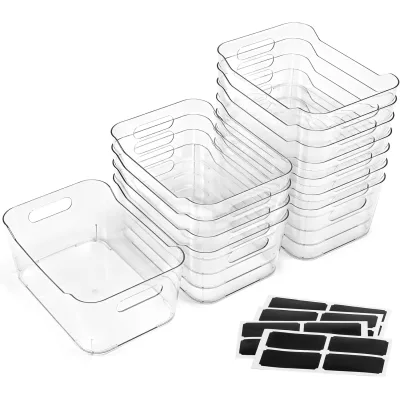
LANDNEOO Plastic Shelf Organizer
LANDNEOO
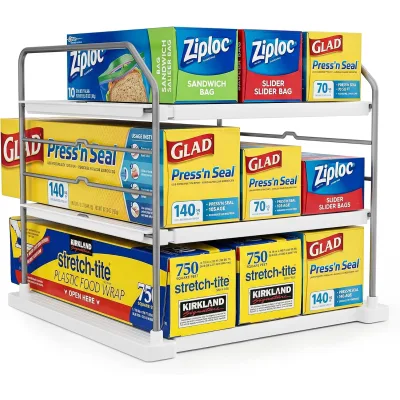
EVERIE Steel Shelf Organizer
EVERIE
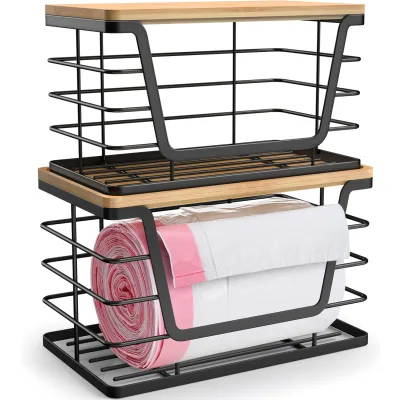
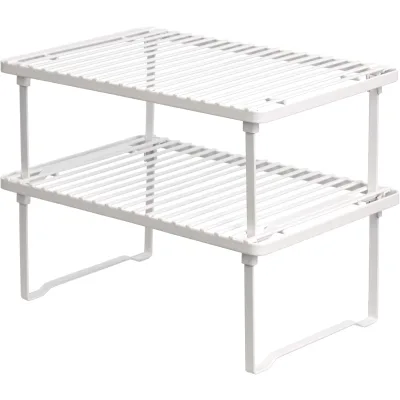
Amazon Basics Metal Storage Bin
Amazon Basics
Prices last updated: June 19, 2026. Always verify on Amazon before purchasing.
Want to compare more options?
See all Cabinet Organizers products →