Best Pantry Can Organizers in 2026
As an Amazon Associate we earn from qualifying purchases. Disclosure
⭐ Our Top Pick
Deco Brothers Stackable Can Rack Organizer for Kitchen and Pantry
Deco Brothers stackable can rack has earned over 21,000 ratings on Amazon -- by far the most-reviewed can organizer in this comparison -- with buyers consistently confirming it holds a full row of cans without bowing or shifting. A dependable, no-frills pick backed by more real-world use than any alternative here.
$25.97
Check Price on Amazon →| Product | Price | Rating | Airtight | Stackable | |
|---|---|---|---|---|---|
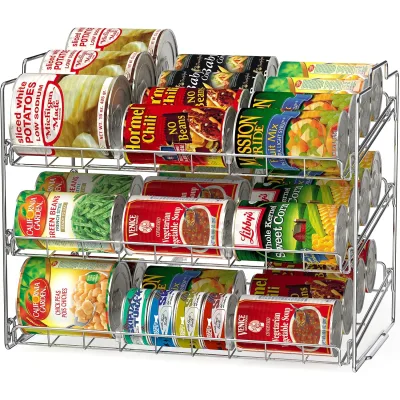 Deco Brothers Stackable Can Rack Organizer for Kitchen and Pantry
Deco Brothers
Deco Brothers Stackable Can Rack Organizer for Kitchen and Pantry
Deco Brothers
|
$25.97 | 4.6 ★ (21,055 reviews) | ✓ | Check Price | |
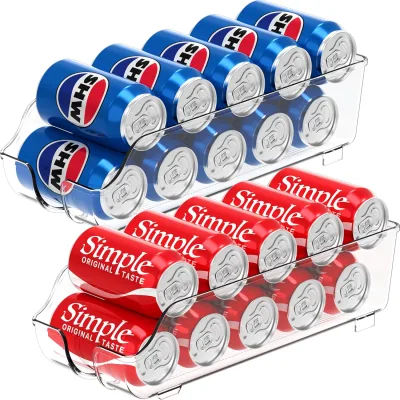 Simple Houseware Soda Can Organizer and Dispenser for Refrigerator / Pantry
Simple Houseware
Simple Houseware Soda Can Organizer and Dispenser for Refrigerator / Pantry
Simple Houseware
|
$13.47 | 4.6 ★ (13,701 reviews) | ✓ | Check Price | |
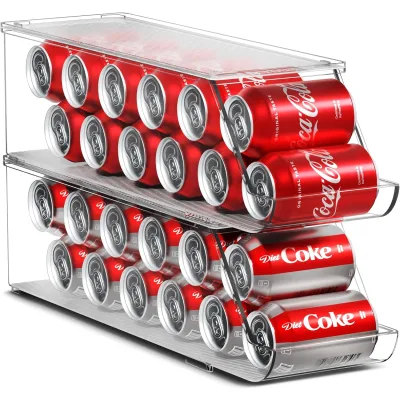 Sorbus Soda Can Organizer for Refrigerator Stackable Can Holder Dispenser
Sorbus
Sorbus Soda Can Organizer for Refrigerator Stackable Can Holder Dispenser
Sorbus
|
$24.99 | 4.6 ★ (6,506 reviews) | ✓ | Check Price | |
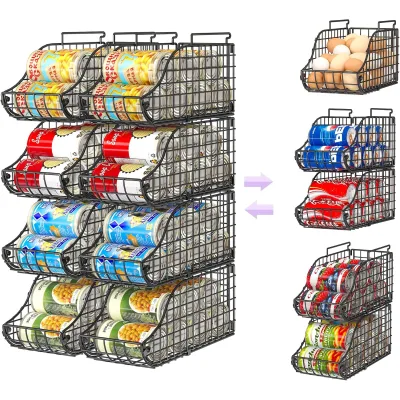 8-Pack Can Organizer for Pantry, Stackable Cabinet Food Shelves for Fridge
Sonyabecca
8-Pack Can Organizer for Pantry, Stackable Cabinet Food Shelves for Fridge
Sonyabecca
|
$48.99 | 4.3 ★ (969 reviews) | ✓ | Check Price | |
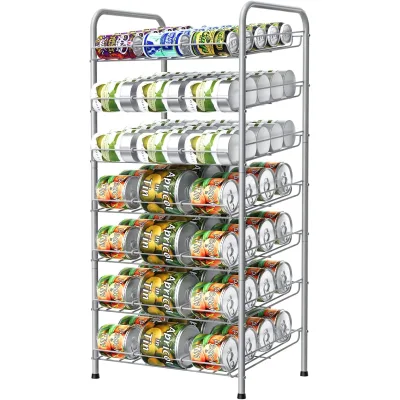 Vrisa Can Organizer for Pantry 7-tier Can Organizer Can Good Organizer for Pantry Shelf
Vrisa
Vrisa Can Organizer for Pantry 7-tier Can Organizer Can Good Organizer for Pantry Shelf
Vrisa
|
$35.99 | 4.6 ★ (904 reviews) | ✓ | Check Price | |
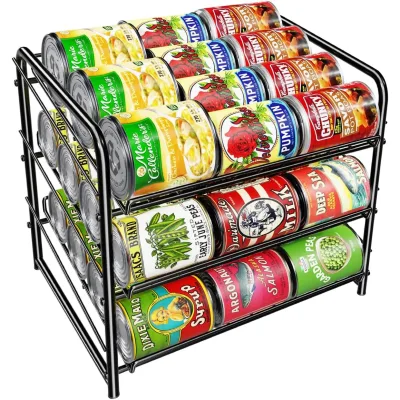 Can Rack Organizer, Stackable Can Storage Dispenser for Kitchen Cabinet or Pantry, Black
Simple Trending
Can Rack Organizer, Stackable Can Storage Dispenser for Kitchen Cabinet or Pantry, Black
Simple Trending
|
$20.99 | 4.6 ★ (339 reviews) | ✓ | Check Price | |
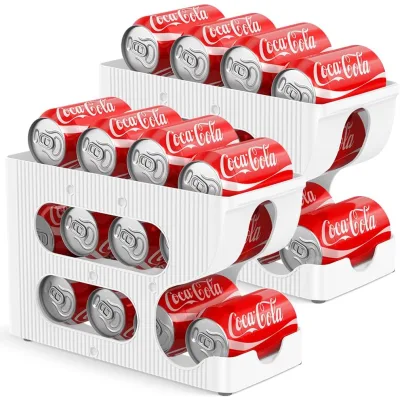 Sotfamily FIFO Soda Can Organizer for Pantry or Fridge
Sotfamily
Sotfamily FIFO Soda Can Organizer for Pantry or Fridge
Sotfamily
|
$23.99 | 4.4 ★ (241 reviews) | ✓ | Check Price | |
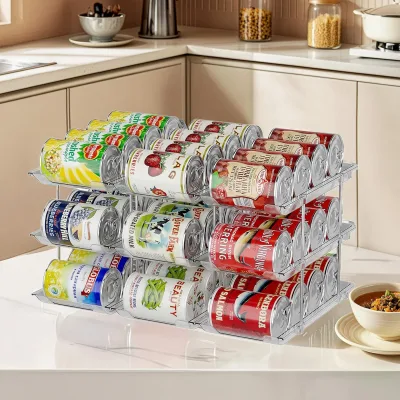 Can Organizer for Pantry, Modular 3-Tier Combinable Can Storage and Beverage Dispenser Rack,Canned Food Organizer Rack
JUYUANHOM
Can Organizer for Pantry, Modular 3-Tier Combinable Can Storage and Beverage Dispenser Rack,Canned Food Organizer Rack
JUYUANHOM
|
$24.99 | 4.6 ★ (235 reviews) | ✓ | Check Price | |
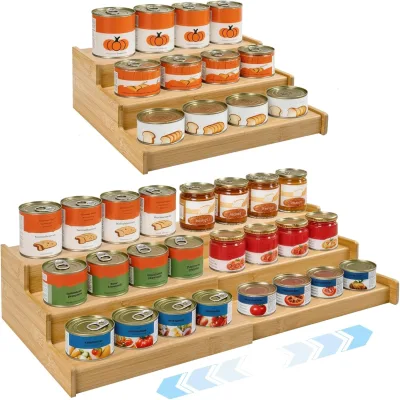 Artcochan 3 Tier Expandable Bamboo Can Rack Organizer for Pantry
Artcochan
Artcochan 3 Tier Expandable Bamboo Can Rack Organizer for Pantry
Artcochan
|
$20.99 | 4.7 ★ (23 reviews) | ✓ | Check Price | |
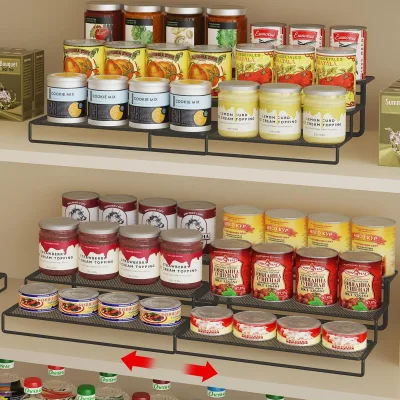 Dmevkic Expandable Can Organizer for Pantry,3-Tier Adjustable Can Organizer
Dmevkic
Dmevkic Expandable Can Organizer for Pantry,3-Tier Adjustable Can Organizer
Dmevkic
|
$19.99 | 4.5 ★ (15 reviews) | ✓ | Check Price |
Prices last updated: July 21, 2026. Always verify on Amazon before purchasing.
Buying Guide
What to Look for in a Pantry Can Organizer
Not all "can organizers" solve the same problem, so start with how you actually want cans to move.
- Rotation mechanism. Gravity-feed and rolling racks automatically bring the oldest can to the front, which is genuinely useful for first-in-first-out rotation if you buy in bulk. Stackable tiered shelves do not rotate automatically, but they cost less and work in shallower spaces.
- Can diameter compatibility. Soup cans, vegetable cans, and larger cans like coffee or crushed tomato cans are not all the same diameter. A rack sized tightly for soup cans may not hold a larger can cleanly, so look for adjustable-width or modular tracks if your pantry has mixed can sizes.
- Shelf depth fit. Gravity-feed racks typically need 14 to 17 inches of shelf depth to hold a useful number of cans per row. If your shelves are shallower, a stackable tiered organizer fits tighter spaces better.
- Capacity vs. footprint. A rack that holds 36 cans but takes up your entire shelf may hold less real value than a smaller rack you could fit two of side by side. Measure your actual shelf width before comparing capacity claims.
- Material. Wire and metal racks tend to hold weight better over time; plastic or PET racks are lighter and cheaper but can flex under a fully loaded row of family-size cans.
Quick Buying Checklist
- Measure your shelf depth front to back before choosing gravity-feed vs. stackable
- Check the can diameter range the rack supports -- most cans run 2.6 to 4.3 inches
- Decide if you need automatic rotation or just visibility
- Confirm the rack width fits your actual shelf, not just the advertised can count
- Choose wire or metal for heavier loads, plastic or PET for lighter, mixed use
Best Can Organizers for Your Situation
- Deep pantry shelves (14 inches or more): gravity-feed rolling racks give you automatic rotation and the most cans per shelf inch.
- Shallow shelves or small apartments: stackable tiered organizers avoid wasted depth and are easy to reposition.
- Garage or basement bulk stockpiling: multi-row wire racks rated for higher weight, since bulk buying means more total can weight per shelf.
- Mixed pantry with varying can sizes: modular or expandable racks rather than fixed-slot designs, so both soup cans and larger cans sit securely.
- Refrigerator use: compact stackable dispensers built for fridge shelf height and beverage cans specifically.
Common Mistakes to Avoid
- Buying based on advertised can count without checking shelf depth first. A rack too deep for the shelf either will not fit or will stick out past the edge.
- Ignoring can diameter variation. A rack sized only for standard soup cans may not comfortably hold a large crushed tomato can.
- Choosing gravity-feed for a shallow shelf. Rolling racks need real depth, or cans jam and do not roll properly.
- Overbuying capacity for household size. A large rack makes sense for bulk-buying families; smaller households often waste shelf space on unused capacity.
- Skipping the weight rating on wire or metal racks if planning to stock a large canned-goods reserve -- lighter materials can bow under sustained heavy loads.
Feature Breakdown
- Gravity-feed and rolling racks: best rotation, need more shelf depth, generally hold the most cans, ideal for bulk buyers.
- Stackable tiered shelves: no automatic rotation, but flexible for shallow shelves and easy to combine with other pantry bins.
- Multi-row wire or metal racks: highest weight capacity, best for garage or basement bulk storage.
- Modular or expandable racks: adjust width and tier count as a can collection grows.
- Compact fridge dispensers: built for shorter shelf clearance and beverage cans specifically, not general pantry cans.